



International Lawyers Alliance
We Are Lawrope
A lawyers and law firms association based in Europe with a worldwide presence.
We are dedicated to helping members’ clients access premium legal professional services far and wide.
Trust, excellence, courtesy, credibility, reliability, and responsiveness are the foundations that our group, its members and our members’ clients are proud of.
Our members form a committed, dynamic, forward-thinking, reliable and skillful alliance.
















Why Lawrope?
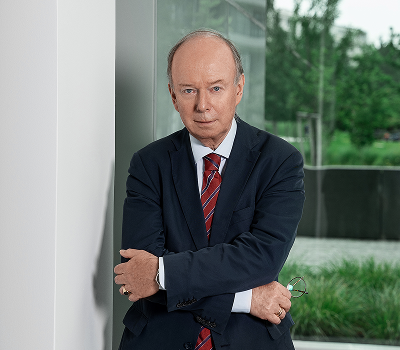
Austria
Andreas Foglar-Deinhardstein
Lawyer and Partner at Foglar-Deinhardstein
“Our law firm has always been focused on transnational legal work. This made it especially important for us to find like-minded and trustworthy law firms in other jurisdictions for cooperation.
In the past we have cooperated with different law firms on a purely informal level, but at the early 2000 decade we were looking for a formal network of law firms with the aim to strengthen our international cooperation. Thus, after some research, we decided to join Lawrope, having come to the conclusion that joining this international law firms network has been the best fit for us.
Lawrope’s principles as a network covering not only the most important jurisdictions, but also the main areas of business law, captivated us. At the same time Lawrope’s size called our attention since personal contact matters, as much as it matters being able to rely on each members law firm’s quality standards.
Important to highlight is that Lawrope is now developing further in order to better accomplish the demands of the members’ law firms. We are thrilled to continue cooperating in this successful network!”

France
Arnaud Fleury
Lawyer and Partner at Foglar-Deinhardstein
“Défis Avocats’ clients are companies of all sizes and they need support, in France and abroad, for both advice and litigation.
The network of Lawrope enables to respond to these same transnational issues, relying on competent and reliable lawyers in complete confidence.
The members of the network of Lawrope can also recommend non-member lawyers based in other countries, increasing this way opportunities for our clients.”

United Kingdom
Barry Stanton
Lawyer and Partner at Boyes Turner
“Boyes Turner joined Lawrope almost 20 years ago. We joined so that we would be able to establish and grow firm links with a Europe-wide group of like-minded lawyers who recognised the need to be able to stretch their advice beyond national boundaries.
The reasons for joining Lawrope then and remaining a member have not changed, indeed they are now more pressing than ever.
During our membership of Lawrope we have worked with the group’s members to resolve our client’s problems across Europe and further afield.
Being able to work with colleagues whom we know well and trust, having met them on a regular basis over the years, is crucial to us in being able to provide an efficient service to our clients.”

Italy
Federica Odello
Lawyer and Partner at Odello – De Capitani
“Since the beginning of my career as a lawyer, I have always believed that an international positioning was necessary to broaden my professional perspective and benefit my clients.
What I found in Lawrope was the best technical know-how guaranteed by its members along with strong personal relationships that make working side by side always an enriching experience.
This mutual cooperation supported by a deep understanding of the local environment creates a safety net for prospect clients who want to cross borders and make business or solve issues where they don’t have the proper resources to do so.”

Mexico
Gonzalo Arrangoiz
Lawyer and Partner of ARRANGOIZ & ASOCIADOS, Business Counsel
“We are very proud to be part of Lawrope, a league of committed and capable lawyers, creating new business possibilities for our clients, for potential clients and for our respective offices, in a reliable and safe environment. By working together like a team we make a difference.”
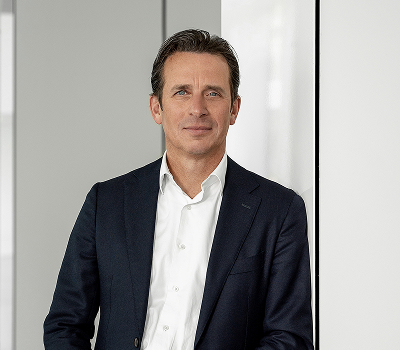
Netherlands
Hans de Crom
Lawyer and Partner at Rijppaert & Peeters Advocaten
“As one of the founding partners of Lawrope, we have experienced the development of Lawrope into a strong and personal group of lawyers.
Lawrope allows us to provide and facilitate our clients with high quality legal services around the world and to welcome new clients and their legal issues from our reliable and trusted partners within Lawrope.”

Spain
Jordi Rovira and Francisco Lacasa
Lawyers and Partners at AGM Abogados
“The professionals that make up Lawrope have proven to AGM Abogados on numerous occasions their expertise, client orientation, excellent practice, and results.”

United States of America
Michael L. Kabik
Lawyer and Partner at Kabik Law
“There are numerous international legal networks with vast ‘phone book’ directories filled with unknown names. Lawrope is different. What truly sets Lawrope apart from these other ‘pay-to-play’ international legal networks are the direct personal relationships, camaraderie, and esprit des corps among its members.
Over 18 years as a Lawrope member, I have experienced Lawrope as a unique blend of preeminent international legal talent where members actually know one another, meeting in person to develop bonds and synergies, building the trust, confidence, and reliability necessary to collaborate and seamlessly support clients’ international legal needs across borders.
Lawrope is small enough where everybody knows your name, yet with members’ vast national legal experience and resources to provide diverse, top-tier, cross-border legal support to meet clients’ business and personal objectives in a timely, efficient, and cost-effective manner, all while focusing on the strength of members’ deep, one-on-one relationships.”

Portugal
Ricardo Gonçalves
Lawyer and Partner at Ricardo Gonçalves
“l joined Lawrope in 2004 because I wanted to internationalize my activity as a lawyer and I wanted to do it in a way to assure the protection of the interests of my clients abroad.
The high quality of the legal services provided by all Lawrope colleagues for over almost 20 years allows my office not only to maintain but also to expand the number of clients, besides contributing for the creation of an excellent network of contacts.
I had the honor to be President of Lawrope between 2018-2022 and getting to know in person the representatives of each Lawrope member made me realize that, beyond the excellent group of professionals, there is a friendship established which lasts and convey confidence to current and new members.”
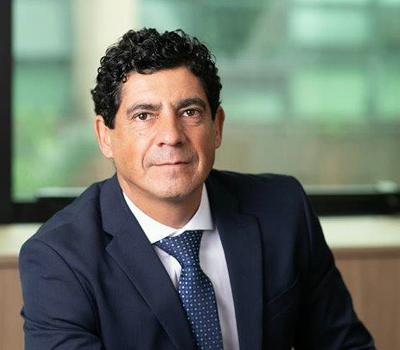
Brazil
Robertson Emerenciano
Lawyer and Partner at Emerenciano, Baggio & Associados
“Being part of Lawrope is an important aspect of our business because since it is an international lawyers network it empower us to offer our clients global legal service coverage and to welcome foreign companies doing business in Brazil.
l had the opportunity to lead Lawrope from 2010 to 2012 and specially during that time I was able to see how the exchange of experiences and knowledge about different cultures and legal systems contributes to the technical development of our own teams in a collaborative work environment.
The growth of Lawrope’s network with coverage in different jurisdictions has increasingly expanded our ability to think globally.”


Become a Member of Lawrope
Your Lawrope membership ensures access to our member firms and its lawyers who provide specialized legal advice to individuals and companies from different jurisdictions, greatly expanding your ability to meet your clients’ needs, both nationally and internationally.
News & Insights
Explore the lastest news and insights to find out what our members are experiencing globally.
Article
October, 2026
The State of International Dealmaking: Insights From the 15th RWP M&A Conference in Düsseldorf
This year the RWP International Lawyers M&A Conference took place in Düsseldorf from 18th to 20th September 2026. It has been organized by RWP founding partner Andreas Lachmann together with Nadine Kley and their excellent team. Andreas Lachmann has established this type of conference already in 2004 and successfully planned and organized it on different places, partly in cooperation with local law firms, till 2019. Due to the pandemic there was an interruption but this year a “revival” of the M&A Conference took place increasing the number of M&A Conferences to 15.
The program included presentations of lawyers from Poland, Austria, the UK, Germany, Spain and Belgium. The speakers gave an excellent overview on “hot topics and recent trends” on the M&A market. Andreas Lachmann himself presented an interesting court case where he finally obtained a decision of the German Supreme Court (“BGH”) in favour of his client. A special highlight was a presentation about tactics and psychological aspects of negotiations.
Besides of this, there was sufficient time for networking, meeting old friends and initiating new contacts. The conference has been completed by a splendid social program.
LAWROPE® has been well represented at the conference by our former president, Robertson Emerenciano from Brazil, and by myself. Furthermore, representatives of LAWROPE® member firms Boyes Turner (Duncan Kay) and FLINN (Louis Van Oostenryck) attended the conference as speakers.
At the end of the conference Andreas Lachmann announced that it is intended to organise the M&A Conference next year in Prague in cooperation with Czech law firm UEPA.
by Andreas Foglar-Deinhardstein from Austria
Article
October, 2026
Real Estate Capital Gains Tax – Simply Explained
A property sale involves more than just signing a contract, paying the purchase price and registering the transaction in the land register – it also raises tax-related questions. One of the key issues is real estate capital gains tax. It is generally levied when a property, condominium or piece of land is sold at a profit. The tax is not charged on the entire sale price, but only on the increase in value achieved.
What Is Taxed?
The basis for taxation is the real estate capital gain. In simple terms, this is the difference between the sale proceeds and the allowable acquisition costs, as well as certain selling costs (such as land registry and notary fees and estate agent fees). The acquisition costs mainly consist of:
⧽ The original purchase price
⧽ Value-enhancing investments, such as converting or extending an apartment, a comprehensive renovation or installing a lift, provided that these costs have not already been claimed as maintenance expenses for income tax purposes.
Pure maintenance and repair costs cannot be deducted for real estate capital gains tax purposes.
Who Pays the Real Estate Capital Gains Tax?
The seller is liable for the tax. The tax becomes due once the transfer of ownership has been legally completed, generally upon registration in the land register.
The tax does not only apply when an entire property is sold. The transfer of co-ownership interests or certain rights (e.g. building rights) may also trigger a tax liability.
Important for buyers: If the seller fails to pay the tax, the buyer’s property may under certain circumstances also be liable. A statutory lien may even be registered against the property. This means that the property itself may be encumbered by, or liable for, the tax debt. For this reason, buyers generally secure the anticipated tax liability directly in the purchase agreement, for example by making a direct payment to the tax authority or using an escrow account.
Why Does the Tax Differ From Canton to Canton?
Real estate capital gains tax is governed by cantonal law. As a result, both the calculation and the amount of tax can vary considerably depending on where the property is located.
The key factors include the amount of the gain, the length of ownership and the applicable cantonal tax rate. In most cantons, the longer a property has been owned, the lower the tax will be.
Can the Real Estate Capital Gains Tax Be Deferred?
In certain circumstances, the tax is not immediately payable. A common example is the replacement purchase of an owner-occupied property. If you sell your house or apartment and reinvest the proceeds within a reasonable period in a new owner-occupied home, you may be able to apply for a tax deferral. This generally does not apply to holiday homes or properties held purely as investments.
In the case of inheritances and gifts, the tax is generally also deferred. It normally becomes payable only when the property is subsequently sold to a third party.
Conclusion
At its core, real estate capital gains tax is straightforward: it taxes the increase in value of a property, with the length of ownership playing a key role. The complexity lies in the differences between cantons regarding deductible costs and tax rates.
If you have any questions about property sales, real estate capital gains tax or other legal aspects of a transfer of ownership, the attorneys-at-law at Pilatushof AG will be happy to advise you.
by Adrian Schmid from Switzerland
Article
October, 2026
7 Signs Your Startup May Be Facing Financial Difficulties (Even if It Is Still Growing)
Growing does not always mean a startup is financially healthy. Many companies increase sales, acquire customers and expand their teams whilst, at the same time, reducing their liquidity, increasing their dependence on external funding, or weakening their ability to respond to challenges.
Most startups do not enter into crisis overnight. Typically, there are warning signs that, if analysed in time, allow risks to be identified and decisions to be made before the available alternatives become much more limited.
Identifying these early warning signs can make the difference between correcting a deviation in time or facing a far more complex financial situation in the future.
Can a Startup Grow and Have Financial Problems at the Same Time?
In the entrepreneurial ecosystem, growth is often perceived as a sign of traction and business model validation. However, it can coexist for a long time with a gradual deterioration in the company’s financial health.
Many startups do not enter into crisis overnight: they accumulate warning signs that, when viewed individually, may seem manageable, but together place the company in a vulnerable position. As long as growth metrics remain positive, these signs tend to be ignored, based on the assumption that the next funding round will arrive or that scale alone will solve existing imbalances.
But growth is not synonymous with sustainability.
Below, we analyse seven signs that may indicate a startup is entering a period of financial stress, even when its commercial indicators remain positive.
1. Growth Without Cash Generation
The first warning sign is growth that does not translate into real cash generation.
The company sells more, secures significant contracts or increases its customer base, yet it continues to depend on external funding to sustain its day-to-day operations, and there is no clear path to profitability or break-even.
Collection periods, customer acquisition costs or premature team expansion can cause growth to consume more resources than it generates.
In some cases, management cannot even clearly explain how that traction will eventually be converted into cash. When this happens, the risk ceases to be purely financial and becomes strategic.
2. Lack of Visibility and Internal Financial Control
Another common symptom appears when the management team lacks reliable and up-to-date financial information.
Financial reporting is delayed, cash flow forecasts are not reviewed regularly, and the founding team is aware of the company’s actual cash position only after weeks of delay.
This shortcoming is not merely administrative. When information arrives late, decisions arrive late as well.
Without financial visibility, it becomes much more difficult to anticipate problems, negotiate with investors, plan funding requirements or react to market changes.
3. Structural Dependence on Funding Rounds
Many startups fall into a dynamic in which the next funding round ceases to be a tool for accelerating growth and instead becomes an essential condition for survival.
There is a fundamental difference between financing growth and financing continuity.
In the first case, investment allows the company to capitalise on a business opportunity. In the second, it is used to cover a cash flow requirement that the business is still unable to sustain on its own.
When a company needs to raise capital on a recurring basis merely to maintain its operating structure, each funding round becomes a critical moment. If the market changes, negotiations drag on, or metrics fail to justify the expected valuation, the room for manoeuvre shrinks rapidly.
The startup then stops making decisions driven by ambition and begins making them out of necessity.
4. Deterioration of Unit Economics
In a scalable model, growth should progressively translate into greater efficiency.
However, a warning sign appears when the opposite occurs: each customer becomes more expensive to acquire, margins shrink, commercial costs increase, or the profitability of each transaction declines.
This deterioration may be reflected in various indicators:
⤷ Increase in Customer Acquisition Cost (CAC).
⤷ Reduction in margins.
⤷ Lower conversion rates.
⤷ Higher customer churn.
⤷ Greater competitive pressure on pricing.
What matters is not a snapshot at a specific moment, but the trend. If efficiency worsens as the company grows, the model may require adjustments before further scaling.
5. Delays in Payments and Treasury Management Pressure
There are more visible signs that usually appear when problems begin to deepen.
Delays in supplier payments, the recurring postponement of tax and payroll-related obligations, and the constant need to prioritise urgent payments are common examples.
A typical sign is when the company begins managing cash flow based on urgency. Payments are prioritised according to the pressure received, and increasingly short-term bridge financing solutions are sought. These measures buy time, but they rarely solve the problem unless accompanied by a review of the financial model.
Liquidity problems eventually become visible to third parties, which in turn causes reputational damage that is difficult to reverse.
6. Reactive Operational Adjustments
When these warning signs emerge, the organisation often reflects a shift from a growth-focused mindset to a defensive one. Hiring slows down, budgets are cut, and initiatives previously considered strategic are put on hold. At a certain point, these measures may be necessary, but they reveal that the company is no longer in an expansion phase, but in a containment phase.
The problem is not adjusting the growth structure or pivoting the business plan, but doing so too late and reactively. Improvised cost cuts or the abrupt suspension of projects convey a lack of planning, affect team motivation internally, and may be interpreted externally as a sign of weakness.
In many cases, these adjustments occur when the company has already exhausted a significant portion of its alternatives. That is why anticipation is essential: the more time available to adjust and restructure the business plan, the greater the decision-making capacity.
7. Loss of Confidence From the Ecosystem
Finally, there is a signal that goes beyond numbers and is often decisive: the loss of confidence from the surrounding ecosystem.
Greater investor intervention, increased difficulties in attracting talent, and increasingly complex financing processes are signs of a gradual and silent deterioration that, if consolidated, can lead to accelerated sale processes or the need to undertake formal restructurings.
Trust is an asset that is extremely difficult to recover.
Investors evaluate metrics, but they also assess the founding team’s ability to anticipate and solve problems. Employees seek stability and growth prospects. Suppliers and partners can tolerate occasional tensions, but not prolonged uncertainty.
Furthermore, the loss of confidence becomes a self-reinforcing vicious circle. When investors no longer support the business plan, alternatives become limited, particularly access to financing, which in turn worsens the company’s standing with commercial partners and employees.
The Risk Is Not the Signal, but Ignoring It
The main risk in a startup growth model is normalising these warning signs or justifying them with other growth metrics.
A company may appear to be moving forward while, in reality, its financial position is weakening and when that imbalance becomes obvious, the room for reaction is often much smaller than expected. The earlier the problem is identified, the more options will exist to correct it without destroying the company’s value.
Acting While There Is Still Room to Manoeuvre
Startups rarely move from a situation of normality to a crisis situation suddenly. More commonly, there are warning signs that reveal something is changing and provide an opportunity to act before the available alternatives are significantly reduced.
The earlier problems are identified, the greater the chances of correcting them, rethinking the financial strategy, strengthening the company’s position and preserving the value created.
In many cases, the difference between a temporary difficulty and a structural crisis lies not in the metrics, but in the speed with which decisions are made when those metrics begin to deteriorate.
Is Your Startup Detecting Any of These Warning Signs?
At AGM Abogados, we support startups, founders, and investors facing financial stress situations, helping them identify risks, assess alternatives and make decisions whilst there is still room to manoeuvre.
Discover how we help startups facing funding challenges, growth issues or financial difficulties through our service: Legal Advisory for Startups in Crisis
